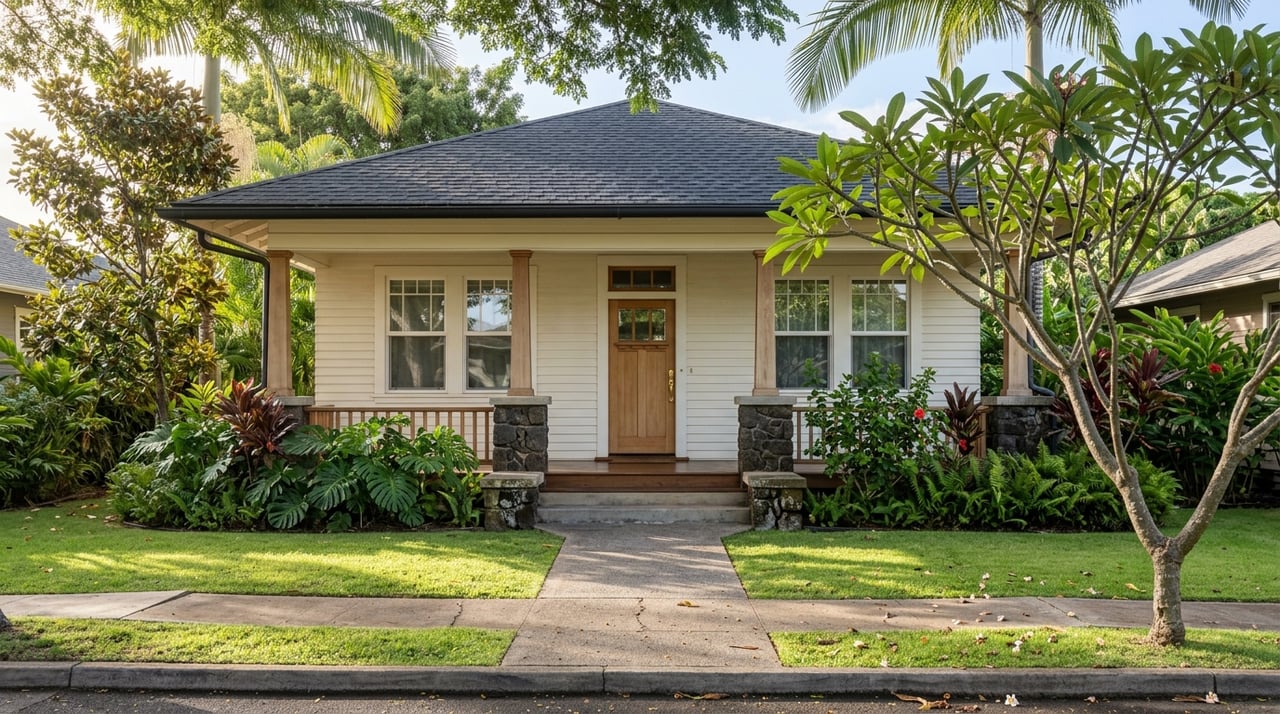
Looking at a classic Mānoa home and wondering whether the charm is worth the extra homework? In many cases, the answer is yes, but only if you understand what makes these homes different from newer properties in Honolulu. When you know what to look for, you can appreciate the architecture, spot practical issues early, and make a more confident decision. Let’s dive in.
Why classic Mānoa homes stand out
Mānoa has one of the largest concentrations of historic residences on Oʻahu, and that gives the neighborhood a distinct feel. You are not just buying square footage here. You are often buying early-20th-century design, mature landscaping, and a valley setting that feels very different from denser parts of Honolulu.
The architectural mix is broader than many buyers expect. In addition to Craftsman bungalows, Mānoa includes Colonial Revival, Mediterranean Revival, and Tudor Revival homes. That variety is part of the appeal, especially if you want a property with character rather than a more standardized layout.
What “classic” often means in Mānoa
Many classic Mānoa homes date back to the first wave of suburban development in the valley. Historic records show homes built during the period when the area shifted from agricultural land to residential use. That history still shows up in the way lots are laid out and how homes sit on the land.
In practical terms, a classic Mānoa house may include details you do not see in newer construction. You might find low-pitched roofs, broad eaves, exposed rafters, deep front porches, built-in cabinetry, multi-pane windows, and wood or double-wall construction. Some homes also have lava rock or post-and-pier foundations.
Common styles you may see
- Craftsman bungalows with porches, overhanging eaves, and exposed rafters
- Colonial Revival homes with balanced facades and classical details
- Tudor Revival homes with a more storybook look on sloping sites
- Mediterranean Revival homes that add another layer to Mānoa’s style mix
Why the valley climate matters
One of the biggest differences in Mānoa is moisture. Upper Mānoa is described by Lyon Arboretum as a tropical rainforest zone, with average annual rainfall of about 165 inches and a range of roughly 90 to 210 inches. That lush, green setting is beautiful, but it also affects how a home lives and how it needs to be maintained.
If you are moving from a drier part of Oʻahu, this can be a real adjustment. Exterior surfaces, rooflines, drainage, and vegetation management tend to matter more here. The same landscaping that makes a property feel private and established can also create more upkeep.
Landscaping is part of the ownership story
Historic Mānoa properties often include mature plantings such as mango, breadfruit, plumeria, ti, and hibiscus. Large gardens and shade trees add to the setting, but they can also mean leaf litter, root management, and more moisture around the home. When you tour a property, it helps to look beyond curb appeal and ask what kind of regular maintenance the landscape may require.
Lot shape and slope can change everything
In Mānoa, lot size alone does not tell the whole story. Historic documentation shows a wide range of parcel layouts, from large original lots to very small nonconforming lots. Some homes sit far back from the street, while others rely on rear driveways, detached garages, or access from more than one street.
That means usability is often more important than the number on the tax record. A large lot may include steep slope, terraced sections, mature trees, or drainage paths that limit how much space you can actually use. A smaller lot may function better if the layout is flatter and access is easier.
Questions to ask about the site
- Is the yard flat, sloped, or terraced?
- Where do cars enter the property?
- Is there enough room to turn around or park comfortably?
- Does the lot have rear-lane or second-street access?
- How much of the outdoor area is truly usable?
Some historic streets in Mānoa are narrow, and at least one documented street in the area has no sidewalks. So when you visit a home, pay attention to driveway geometry, street width, and how comfortable daily access feels.
Moisture and termites should be top priorities
For many buyers, this is the most important part of the decision. The University of Hawaiʻi Termite Project identifies the Formosan subterranean termite as the single most damaging insect pest to homes and other structures in Hawaiʻi. Termites need moisture, and older wood homes in a wet valley deserve close review.
This does not mean you should avoid classic Mānoa homes. It means you should approach them with a strong inspection mindset. In this neighborhood, moisture management is not a small issue. It is part of the core ownership experience.
Areas to pay close attention to
- Roof and eave conditions
- Attic vents
- Plumbing and utility openings
- Cracks in concrete or foundations
- Soil-to-wood contact
- Signs of mud tubes or frass
- Water collecting near the structure
University of Hawaiʻi guidance also recommends keeping plants and planters away from walls and fixing leaky faucets, sprinklers, or drains that leave water near the home. For a buyer, that reinforces how closely landscaping, drainage, and structural care are connected in Mānoa.
Expect comfort upgrades, not always turnkey efficiency
A classic Mānoa home may have wonderful cross-breezes, shade, and architectural character, but you should not assume it will perform like a newly built house. Hawaiʻi Energy notes that as much as half of home energy use can go to cooling, and it recommends practical steps such as using window coverings, keeping windows and doors closed while cooling, maintaining AC filters, and choosing efficient room or window air conditioners.
For many buyers, the best approach is to think in layers. Comfort may come from a mix of ventilation, shade, targeted cooling, and selected upgrades rather than one major whole-house solution. Depending on the property, you may also want to explore available programs tied to weatherization, appliance upgrades, solar water heaters, or heat-pump water heaters.
Check historic status before planning changes
Historic status can matter in Mānoa more than in many other Honolulu neighborhoods. Under Hawaiʻi law, an historic property is generally a building, structure, site, or district that is 50 years or older. The State Historic Preservation Division says listed properties on the Hawaiʻi Register may be eligible for county property tax benefits and grant funding, and certain projects may be reviewed for compliance under HRS Chapter 6E and the National Historic Preservation Act.
For buyers, the key point is simple. If you are thinking about additions, major exterior changes, or demolition, start by confirming the property’s status early. A home being older or architecturally notable does not automatically mean you cannot make changes, but it does mean you should do your homework before assuming what is possible.
Review drainage, flood maps, and hillside conditions
Because Mānoa includes stream areas, slope, and a wet valley environment, parcel-level due diligence is especially important. Honolulu planning documents discuss flood damage in Manoa and Palolo stream areas and emphasize drainage improvements and watershed management. USGS mapping has also identified deformational features from slope movement in Mānoa Valley, including sites with possible recent or incipient movement.
That does not mean every property has a drainage or slope problem. It means you should evaluate each parcel on its own merits. For any home you are seriously considering, flood hazard information should be checked through the official FEMA Flood Map Service Center, and the site itself should be reviewed with close attention to grading, runoff, and hillside conditions.
Due diligence checklist for classic Mānoa homes
- Confirm whether the parcel is in or near a mapped flood hazard area
- Look at how water appears to move across the site
- Check whether the lot is heavily sloped or terraced
- Review retaining areas, grading, and drainage patterns
- Ask about past repairs related to water intrusion or site stability
- Verify any historic status before planning future renovations
How to compare Mānoa with other Honolulu options
Classic Mānoa homes offer something many buyers cannot find elsewhere in Honolulu. You get older architecture, established greenery, and a valley setting with a strong sense of place. If that is what you love, the tradeoff is being more disciplined about the details.
When you compare Mānoa with other neighborhoods, focus on the full picture. Not just bedroom count and square footage, but also moisture exposure, termite risk, access, slope, usable yard area, and any historic considerations. That is often what separates a beautiful home that works well for you from one that becomes more work than expected.
A good buying decision in Mānoa usually comes down to matching the home’s character with your comfort level for upkeep and your plans for the property. If you go in with clear eyes, classic Mānoa homes can be incredibly rewarding to own.
If you are considering a classic home in Mānoa, having local guidance can make the process much clearer. From evaluating lot layout and long-term upkeep to understanding how a property compares with other options across Honolulu, Jaymes Song can help you buy with more confidence.
FAQs
What makes a home a classic Mānoa home?
- In Mānoa, “classic” usually refers to older homes from the early-20th-century development period, often featuring styles like Craftsman, Colonial Revival, Mediterranean Revival, or Tudor Revival.
Why is moisture such a big issue for Mānoa homes?
- Upper Mānoa has very high rainfall, and that wet environment can affect roofs, exterior materials, drainage, and termite risk, especially in older wood homes.
What termite concerns should buyers watch for in Mānoa?
- Buyers should pay close attention to mud tubes, frass, soil-to-wood contact, leaks, cracks, and any areas where moisture may collect near the structure.
Do classic Mānoa homes always have large usable yards?
- No. Lot size can be misleading in Mānoa because slope, terracing, mature trees, drainage paths, and access can reduce how much outdoor space is actually practical to use.
Can historic status affect renovations on a Mānoa home?
- Yes. If a property has historic status or is register-listed, planned additions or exterior changes should begin with a status check and early due diligence.
How should buyers evaluate flood and slope risk in Mānoa?
- Buyers should review the parcel’s flood hazard information through the official FEMA Flood Map Service Center and closely assess drainage, grading, and hillside conditions at the property level.